Saturday, October 8, 2011

What do these even mean?


Top 25. Power Rankings. RPI. Seeds. BCS.

The worst part of sports is that at some point, there is a limit. There are only so many games that can be played. Bodies wear down. Fans get bored. Apathy sets in.

Which is why there is so much dispute in sports, specifically in college football. Every week I look up the current Top 25, without actually knowing what "Top 25" even means. Does it mean that these are the 25 best teams? That #1 would beat #2, #2 would beat #3, #3 would beat #4, ect?

Or does it mean that these are the 25 most deserving teams. The 25 most accomplished teams. Maybe LSU is the best team in the country, but what if (hypothetically) LSU had beaten 6 directional schools ("they just have a lineage of sucking"), while SMU beat 5 directional schools and pulled an upset over a championship contender (let's say Oklahoma). Should SMU be ranked higher?

It's all very confusing. In college basketball, we have a nice little tournament to clear things up at the top. But how are we supposed to decide in college football?

Sure we get great matchups every week like Oklahoma vs. Texas in a few hours that helps to clear things up, but how do we decide who to rank higher between Wisconsin and Boise State? Or to make things worse, how do we decide between a 2-2 Texas A&M (losses to Arkansas and Oklahoma State) and 5-0 Illinois. I'm pretty sure Texas A&M could beat those scrappy fighting Illini (although with the Zooker, you never know what's going to happen), but does that mean they should be ranked ahead of them?

I'm personally in favor of rewarding teams for accomplishments, but not punishing teams so much for losing to great teams. Let me explain.

If Team A is ranked number 1 and Team B is ranked number 25, why should a close loss knock Team B out of the top 25. Does Team A winning change anything we think about these two teams? Of course not. In fact, if Team A barely wins, I would argue that Team B should move up in the rankings. Why can't a close loss show that you're actually a better team than what we originally thought?

At the end of the day, we all know that rankings are driven by money, and that'll never change. Top 25 rankings shouldn't even exist till halfway through the season, but we need those great matchups (on paper) to get fans to turn on the TV. And you don't think coaches take advantage of the ambiguity to get their conference teams in the Championship game? More bowl games means more money for the conference.

Poor Boise State. There are just too many holes in the system.

Friday, October 7, 2011

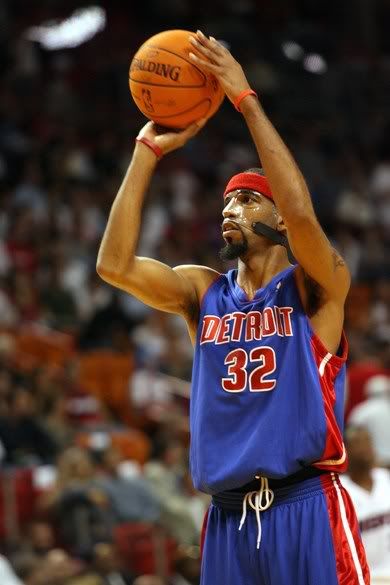
NBA Heroes: Lucious Harris’ Nose


Before Manu Ginobili, before Courtney Lee, before Rip Hamilton there was Lucious Harris.  More specifically, there was his nose.  Standing 2”, weighing in at 0.11 pounds, in March of 2002 Lucious Harris’ nose (hereafter referred to as “Nose”) was fed up with its role in the New Jersey Nets’ system – perhaps the least valued sense of Lucious, he found himself ignored and unused during an NBA season in which the Nets were making a strong playoff push.  Finally, in March of 2003, Nose snapped.

When Lucious Harris returned to NBA action following a stint on the Nets’ Physically Unable to Perform list, Nose found himself in quite a privileged position – behind a soon to be infamous plastic face guard.  The Face Mask completely changed Lucious’ game; in his first game back he scored 17 points and soon he found himself acting as the Nets’ 6th man during a late playoff push into the 2002 NBA Finals.  Even after Nose was given a clean bill of health, Lucious insisted on wearing his face mask as a good luck charm (and because there was a rumor that Todd McCulloch had a thing for noses.  Turns out it was pinball).  Nose took this success and ran with it, making an appearance in Sports Illustrated’s Finals coverage and helping Lucious to 8 points a game as the Nets were swept by the Lakers in the Finals. 

Although Nose soon faded from glory (he retired, along with Lucious, in 2005), his legend lived on.  Soon other basketball players’ noses began demanding similar treatment, and the face mask gained notoriety.  After Rip Hamilton’s nose won championships with the Detroit Pistons in 2004 and 2005, the trend of nose protection blew up.  Famous role players like Lebron James have continued the blossoming tradition of “Veneratio pro nose” (roughly translated as “Respect for Nose”), and today surveys of NBA noses suggest unprecedented levels of job satisfaction and happiness.  In 3 of the past 4 NBA seasons the league has matched or exceeded 100 ppg per team, a trend which can largely be attributed to increased nose satisfaction and the resulting improvement in quality of play.

The current trend of nose protection in the NBA and resulting increase in league wide scoring over the past twenty-fifth of a century can all be attributed to the actions of one heroic nose.  This nose refused to accept a status quo which failed to respect the organ responsible for a consensus Top 5 sense.  Instead, its courageous break from industry norms has resulted in a newfound appreciation for nostrils, a schnoz shake-up,  an olfactory overload changing the game of basketball at the professional level.

Thank God for you, Lucious Harris’ Nose.

Joe Silvestro is a regular contributor to Sports Casual, check back every Funday Friday for his witticisms concerning the Wide World of Sports.  Email him at jsilvestro21@gmail.com

Thursday, October 6, 2011

Technology and Sports


(First blog post in history to have a picture of both Tris Speaker and Steve Jobs)

This post is in honor of Steve Jobs, arguably America’s greatest industrialist of all time. Though Steve will be known for how his products changed a multitude of experiences for users around the world, we will take a look, in broad strokes, of how technology has affected sports.

Era of Mass Communication

In 1916, the Boston Red Sox and Cleveland Indians came to a deal trading Sam Jones and Fred Thomas from the Indians to the Red Sox for a superstar named Tristram “Tris” Speaker (above). While this is probably the last time the Indians ever got the better end of a trade with the Red Sox (Tris ended up hitting close to .350 for his time in Cleveland and his career batting average, .344, remains 7th all-time in Major League history), the real interesting thing was this is one of the first trades to be made using a radical new device: the telephone. Though the Indians and Red Sox did meet in person, exchange telegraphs, and send letters – they did conduct some of the negotiations over the phone. Crazy! Now, if your Billy Beane, you have three cell phones, 2 blackberrys, and an iPhone as you are talking to several GMs at once, who may be thousands of miles away.

This communication boom has also affected how players are perceived and looked at. Players no longer have much privacy, as Chris Broussard, Rachel Nichols, and other professional stalkers/reporters will give us updates on their every move. Ty Cobb was a son-of-a-bitch racist, Mickey Mantle was the consummate drunk, and Ted Williams a hot-head. But, we do not seem to focus too much on these thing now – all of them are viewed as greats and few seem to talk or think of their riddled pasts. Few players nowadays can escape how their personal life affects their image as stars on the playing field – just ask Tiger Woods (who may have never been caught 50 years ago), TO (who may be one of the greatest receivers of all time – what!? Look at his stats), and countless others.

Game-time Technology

The NFL head coach yells into his Motorola wireless headset, asking his assistant coach in the booth to look at the high definition replay of the fumble and wonders if he should throw the red flag onto the field so that the referee can go to a TV booth, also on the field, to assess whether the play was called correctly or not. Yes, this is just like Otto Graham’s football.

Replay has changed sports. College/NFL football, tennis, hockey, college/NBA basketball, and even baseball use it to correct errors in the game – no more phantom touchdowns, goals, or anything else. Yet, beyond just reviews, replay is used ubiquitously as TV filler as we have to hear idiots like Chris Collinsworth or Boomer Esiason go into ridiculous detail about how little they know about football.

Other game-time technology has also changed the experience of sports: the speedometer, the digital scoreboards (with TVs!), stadium music, and more!

Information Boom

Perhaps the most important thing that technology has given us is the access to greater information about our favorite teams. It has revolutionized the way front office personnel look at talent, but it has also made fans and players more well informed.

Want to know how bad Alex Rodriguez is in the playoffs? Don’t wait for the stats in tomorrow’s paper to tell you – look it up on your computer, or your phone! Want to know how much a couple of tickets for the Michigan/Northwestern football game is? Don’t look in the classifieds or wait until game time to scalp – go to StubHub or Ebay!

It is simply awesome how much information is available to the casual sports fan. It allows us to understand the game on a deeper level, attend the games with greater ease, and waste countless hours trying to perfect our fantasy sports teams (yes, TitforTat is undefeated).

What it Means

Steve Jobs did unbelievable things to revolutionize the way we look at technology and even information. Sports has undoubtedly benefited and will continue to do so.

Wednesday, October 5, 2011

Playoff Series: Five Games Or Seven? (Or Something Else?)


The MLB playoffs are in full swing. One division series has already wrapped up, and two more could come to an end tonight. It seems like it was just last Friday that these playoff series started. It begs the question, is a five-game series appropriate for the first round of baseball playoffs? Would seven games be better? And furthermore, are seven-game first-round series the best choice for other sports leagues?

Here's a look at the playoff structures for the major sports leagues, minus all the ESPN hyperbole and idiocy that you're used to. Keep in mind, these comments focus mainly on first-round series, not later rounds.

MLB - Five-games is perfect for the first round of the Major League Baseball playoffs.  While many fans complain that five games is too short given the context of a 162 season, I will contend that playoff teams are, for the most part, very close together in terms of skills. Thus, adding a few more games to such a small sample set won't necessarily have a big impact in ensuring that the "right" team wins.


NBA - The NBA changed from a five-game first-round to a seven-game one in 2003, but it would do well to go back to the old model. Since the inception of the seven game series, only 11 of 72 first-round series (15%) have gone to a game-seven. Shrink the sample size to the last 2 years, when parody in the NBA has continued to diminish, and we see only 1 of 16 series going to seven games. It simply isn't worth playing into late June when everyone knows who will win the first round series anyway.


NHL - First round series in the NHL are appropriately seven-games long. The NHL needs to make up for its lack of exposure during the regular season with exciting playoff series. Every year, it seems, we get very compelling seven-game series, with 8-seeds challenging 1-seeds and intense dogfights in the 4v5 playoff.


NFL - The NFL playoffs are perfect, with one caveat: division-winners should not be guaranteed home field advantage in the first round. The Seahawks don't deserve to benefit from the 12th man just because no one on the west coast has figured out how to play football yet.


MLS - Soccer playoffs are interesting. The MLS receives lots of criticism because - let's face it - American soccer is so amazingly mediocre. But the aggregate format (one home game, one away game, highest total score wins) is a very compelling scenario. It's almost like watching one "super game." The MLS was right to borrow this format from European soccer, but was also wise to abolish the use of "road goals" as the tiebreaker. That's something American fans simply could not stand for.

NCAA Football - Get it? What a riot.

Tuesday, October 4, 2011

Caution: Pucks Dropping


With all of the big 2010-2011 NHL headlines  (a concussed Crosby, the rebirth of the Winnipeg Jets, an incredible seven-game Stanley Cup final, and so forth) still somewhere in the rear view mirror, it's hard to believe that another NHL season starts in just six weeks.

Wait, it starts this Thursday?!?! WHAT?!?!

It's easy to sit in the comfort of my own home and criticize the ways in which commissioners run major U.S. sports leagues. It's also fun. So I'm going to go ahead and do it.

Gary Bettman, get it together. The NHL season has absolutely no business starting in the first week of October. I am a firm believer that hockey should not be played until water is freezing in a substantial portion of inhabitable North America. (Of course, hockey also should not be played in cities that have never seen snow, but that's a digression I'll have to explore another day).

Sports leagues are businesses, and their number one product is games. Widespread desire to consume said games leads to enormous television deals and big piles of gate receipts. The goal of the NHL should be to showcase these games the best way that it can. So it begs the question, why try to "showcase" the opening day of your season when no will care?

From now until the end of October, the majority of sports fans - hockey fans included - will be watching playoff baseball at night. Why? Because playoff baseball is awesome. On Sundays (and maybe Mondays), sports enthusiasts will be in front of the TV flipping between NFL games. That doesn't leave a lot of room for hockey, at least not for a month or so.

Other sports leagues have opening day down to a science. The NFL picks out one great game and makes a primetime party out of it on as fall gets under way. The MLB starts all or most of its opening day games in the afternoon on an early spring day. Even the NBA does an adequate job of getting its season started by picking two marquee games to showcase in primetime on a day in late October.

The first ever NHL season began on December 19th. I'm not saying the NHL needs to delay the start of its season by ten weeks, but pushing the season back a month or so could be a big help for the league. Wait until the baseball season has ended and fill that void. Pick a great game - a Stanley cup rematch, perhaps - and put it on NBC. What kind of sports fan could resist tuning into that?